

December 17, 2025
Press releases
A kindergarten in a small Moldovan village is not the place most people would expect to find an innovation in climate resilience. Yet in Bilicenii Vechi, Singerei district, a quiet revolution is now taking place under the playground of Kindergarten “Albinuța”: Moldova’s first rainwater harvesting system for a public institution.
The idea started simply. Rising water bills, periods of water scarcity, and growing concerns about the environment pushed local authorities and Caritas Czech Republic (CCR) to ask a basic question: could rainwater become part of the solution? Turning that question into reality, however, proved anything but simple. When the project began in November 2023, neither local companies nor authorities had previous experience with such a system. There were no tailored regulations, no local examples to follow, and initial budgets underestimated the true cost of an innovative infrastructure that required imported underground equipment and strict technical standards.
It quickly became clear that securing the right construction company would be more challenging than anticipated. For months, CCR and its partners navigated a maze of technical designs, revised cost estimates, and repeated procurement attempts. Czech experts helped design the concept, while Moldovan specialists translated it into local legal and engineering language. A new construction partner eventually came on board in 2025. By then, administrative changes had already forced the project to request several no‑cost extensions. What might have seemed like setbacks, however, gradually became a source of learning: the team refined its risk management, strengthened communication with the donor, and built a reliable network of local contractors and technical supervisors that did not exist before.
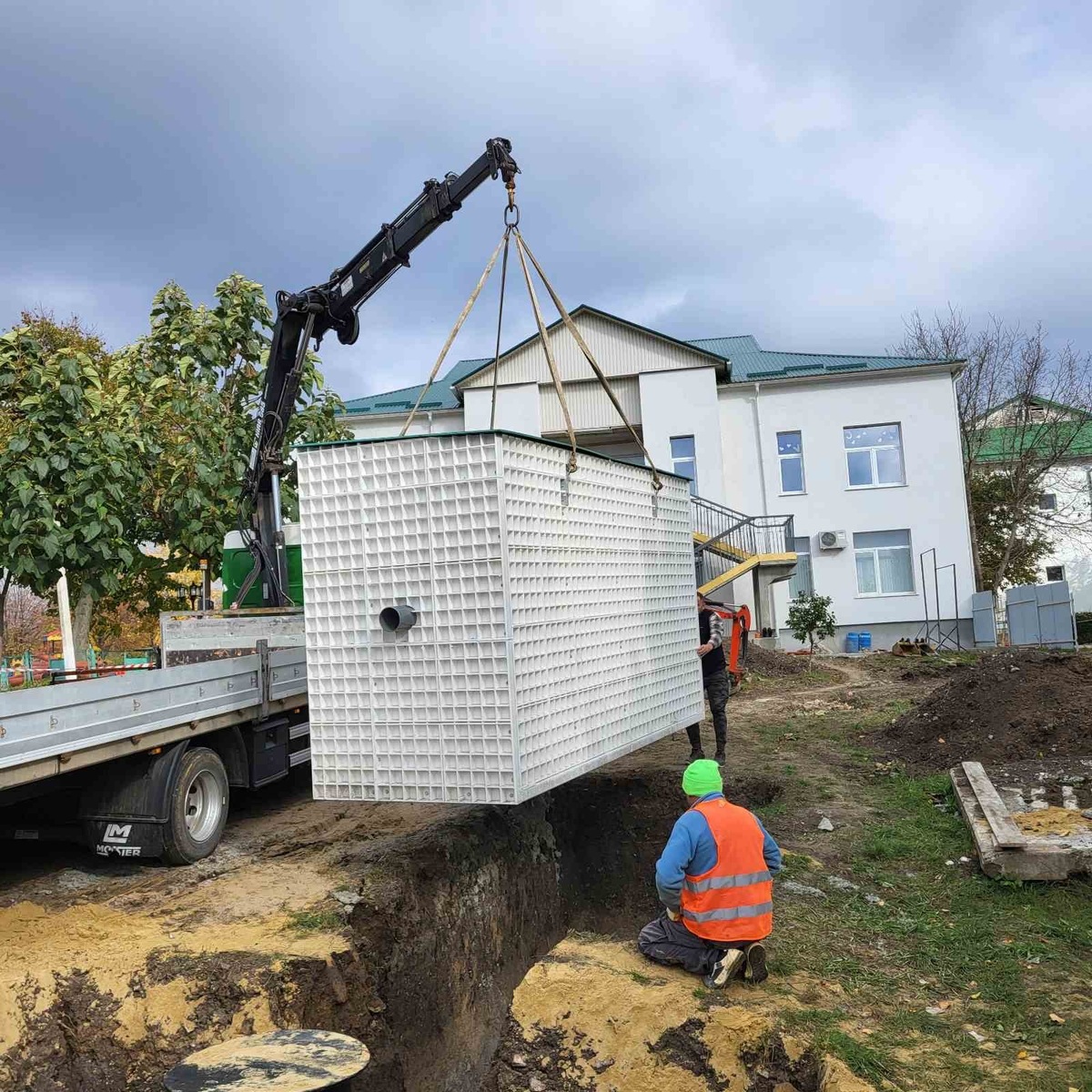
Construction began in September 2025, marking the transition from plans to visible change on the ground. A 20‑ton underground cistern was installed, connected to a system designed to capture and use rainwater for the kindergarten. It may fully support the kindergarten for over a month. While the technical project covered only the external system, local authorities committed to investing in future internal connections to sanitation facilities. The Village Hall—legal owner of the building—stepped forward as long‑term custodian, assuming responsibility for operation and maintenance. For the mayor, Natasa Bezerau, the project was more than an engineering achievement; it was a practical way to protect the environment while easing pressure on local budgets.
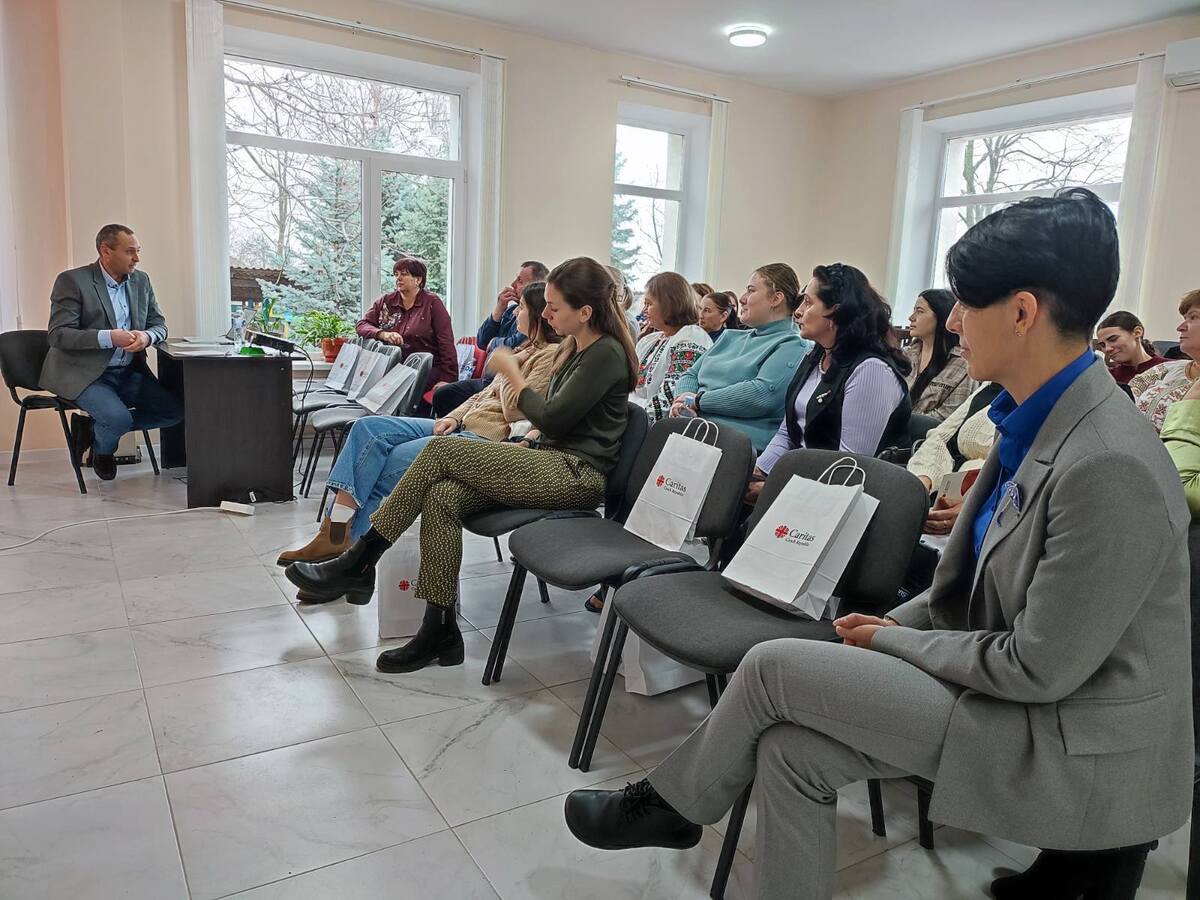
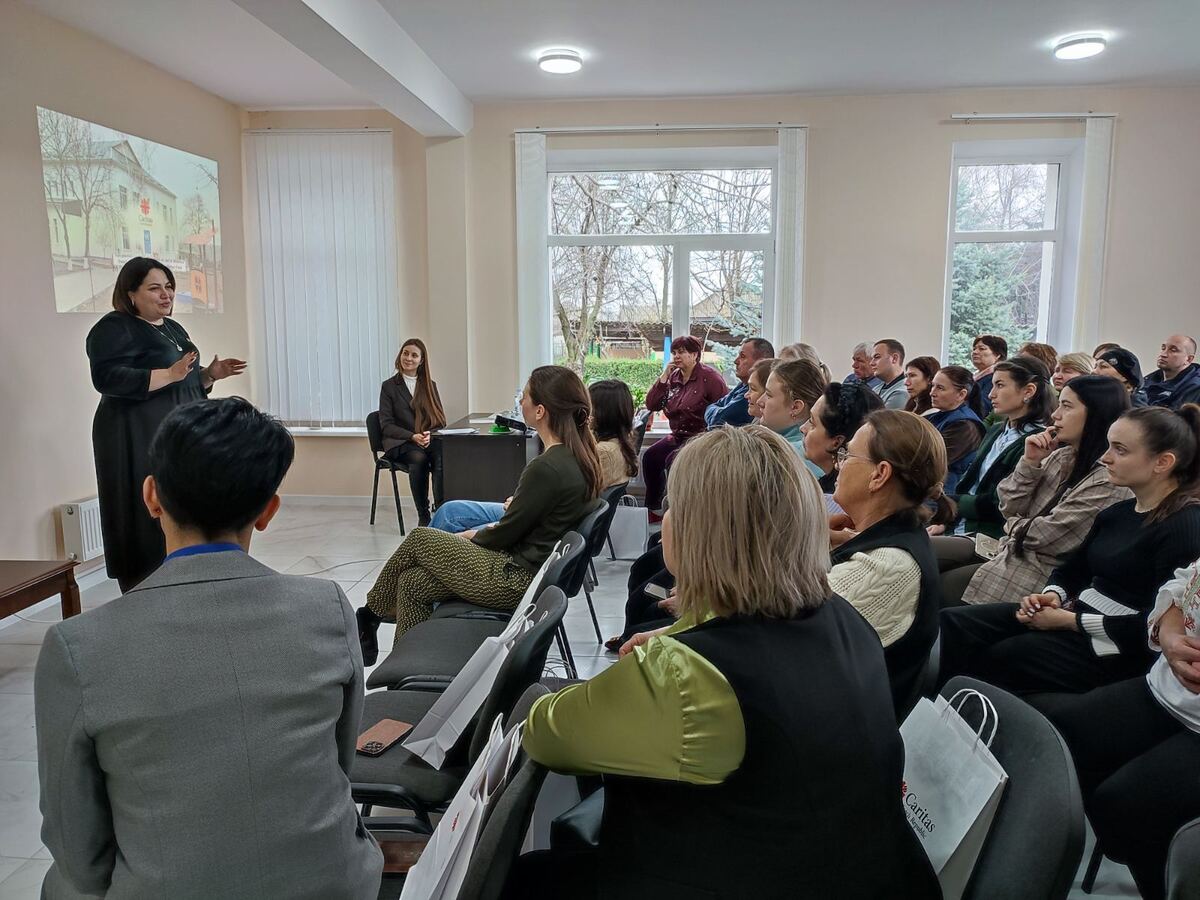
When the time came to share this experience with the rest of the country, CCR and its partners made a deliberate choice. Instead of hosting a final event only in Chisinau, they invited officials directly to Bilicenii Vechi to see the system in operation. Over 90 mayors from villages and towns received invitations; despite short notice and the busy end‑of‑year period, 51 participants arrived, representing both public authorities and residents. In the courtyard of “Albinuța,” under the same skies that now feed the underground cistern, they listened as the Counsellor of the Embassy of the Czech Republic, Barbora Žáčková, spoke about long‑term Czech support for Moldova, and as Mayor Bezerau described how a “green” investment can change both environmental impact and water bills.
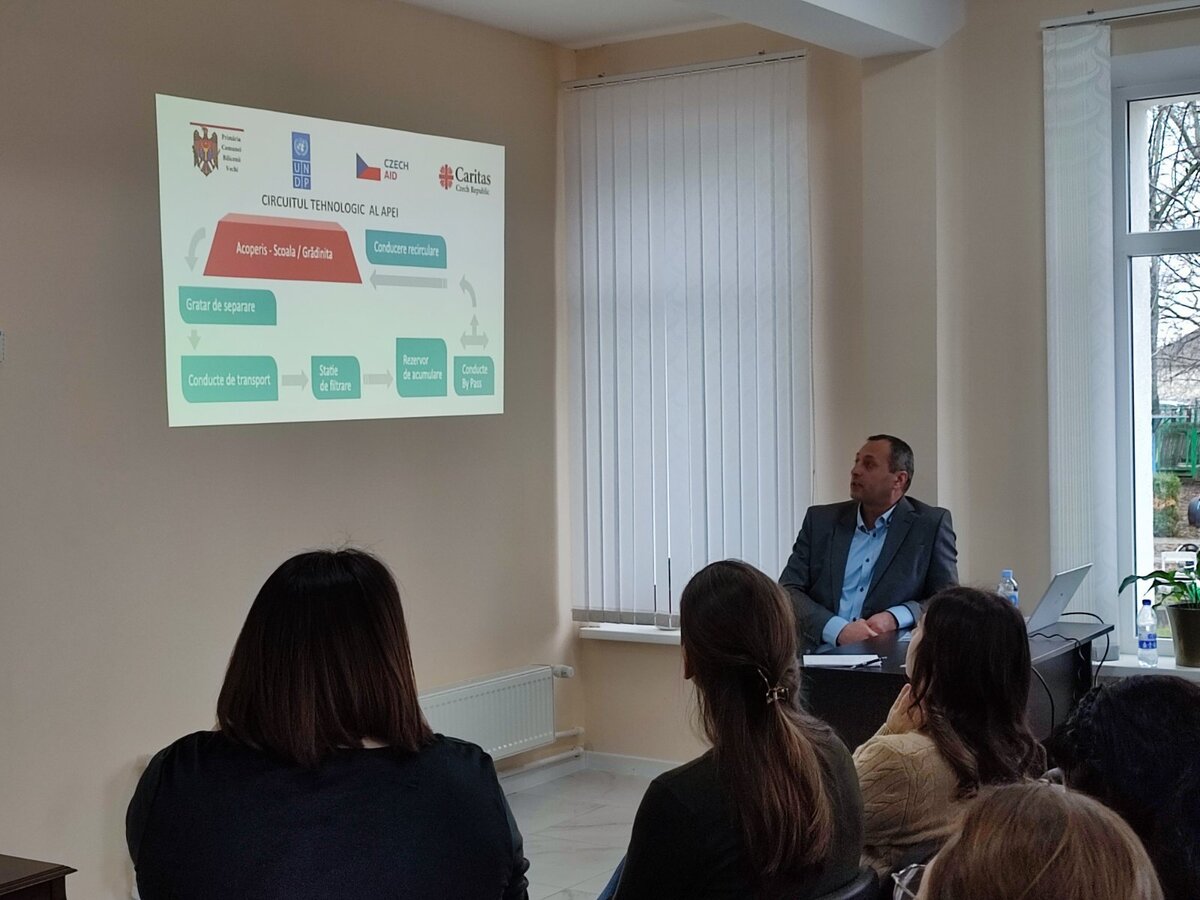
Rather than a formal presentation, the event focused on demonstration and dialogue. The project author walked participants through the technical logic of the system, answering questions about water treatment, maintenance, and the next steps needed to bring rainwater inside the building. CCR’s technical manager and a representative of the construction company then guided visitors to see the infrastructure itself. What began as a pilot suddenly became tangible: pipes, valves, the cistern, and the promise that what worked here could be replicated elsewhere. In a networking corner over lunch, mayors exchanged ideas about how such systems could be adapted to their own communities, and the mayor of Bilicenii Vechi shared further “green” initiatives she hopes to launch.
To ensure that knowledge would extend beyond a single event, CCR and its Moldovan expert team prepared a practical tool: the “Guide for Easy Setup of a Rainwater Use System.” CCR drew on local expertise and the project author to produce a step‑by‑step manual explaining why rainwater systems matter, what components are needed, and how to design, build, and maintain them. With diagrams and accessible language, the guide was distributed during the National Conference, and an electronic version was made available online to reach a wider audience while reducing environmental footprint.
The story of this project is no longer just about one kindergarten. It is about how a small rural community, supported by Czech and Moldovan partners, turned an experimental idea into a working model; how obstacles in procurement, budgeting, and administration became lessons that will shape future initiatives; and how a single underground cistern has sparked a national conversation about water, climate, and responsible public investment. For Moldova’s mayors and residents who walked away from Bilicenii Vechi with a guide in hand and fresh in their minds, the message is clear: rain, once seen as a problem, can become part of the solution.